

Virtual reality.
Development of anything in virtual reality. Planning and design. 3D modeling, rigging and animation. Programming, testing, implementation. Integration with third-party services or hardware.
Software and hardware solutions for business and entertainment using cutting-edge technologies.
Development of anything in virtual reality. Planning and design. 3D modeling, rigging and animation. Programming, testing, implementation. Integration with third-party services or hardware.
AR and MR for guided work, data visualization, and the gamification of any scenarios and ideas.
Mobile, PC and VR games of different genres. Action. Shooters. RPG. Strategy. Simulators. MOBA. Hyper‑Casual. Match‑3.
Applications, simulators and control systems written to your requirements. We use artificial intelligence to automate and speed up processes.
Controllers, sensors and mechanics that work together with the software in one system. Embedded systems, electronics, printed circuit boards and firmware.
Describe the task in your own words. We will propose the format.
Tell us the taskThe studio owner is deeply involved in the project work, so quality and deadlines are met.
Describe the task in your own words. We will propose the format.
Virtual reality lets armed forces train soldiers and crews in realistic scenarios without ammunition, fuel or risk. We look at where VR already pays off in military training and what to consider before the first project.
Read more →AI assistants take over routine code, concept art, placeholder assets and testing, so a first playable version appears sooner and the team spends its time on what makes the product unique. Here is where AI really speeds up Unity development and where an engineer still has to make the call.
Read more →One codebase for VR headsets, mobile devices and desktop, a huge asset ecosystem and fast iteration. We explain when Unity is the right engine for a simulator and when it is not.
Read more →Feel free to read along or jump to the section that interests you:
Let’s get started.
Immersive technology gives a business a new way to train people, show products and test ideas before spending real money. A good project starts with the task and the result you need, not with the technology.
A simulator recreates a real situation inside a computer, so people can practice it as many times as needed without risk. The same approach works for equipment, vehicles, safety procedures and sales demonstrations.
Before development starts, we agree on the goal, the audience, the platform and the budget range. Then the team builds a first working version quickly, so you can see the result and adjust it early.
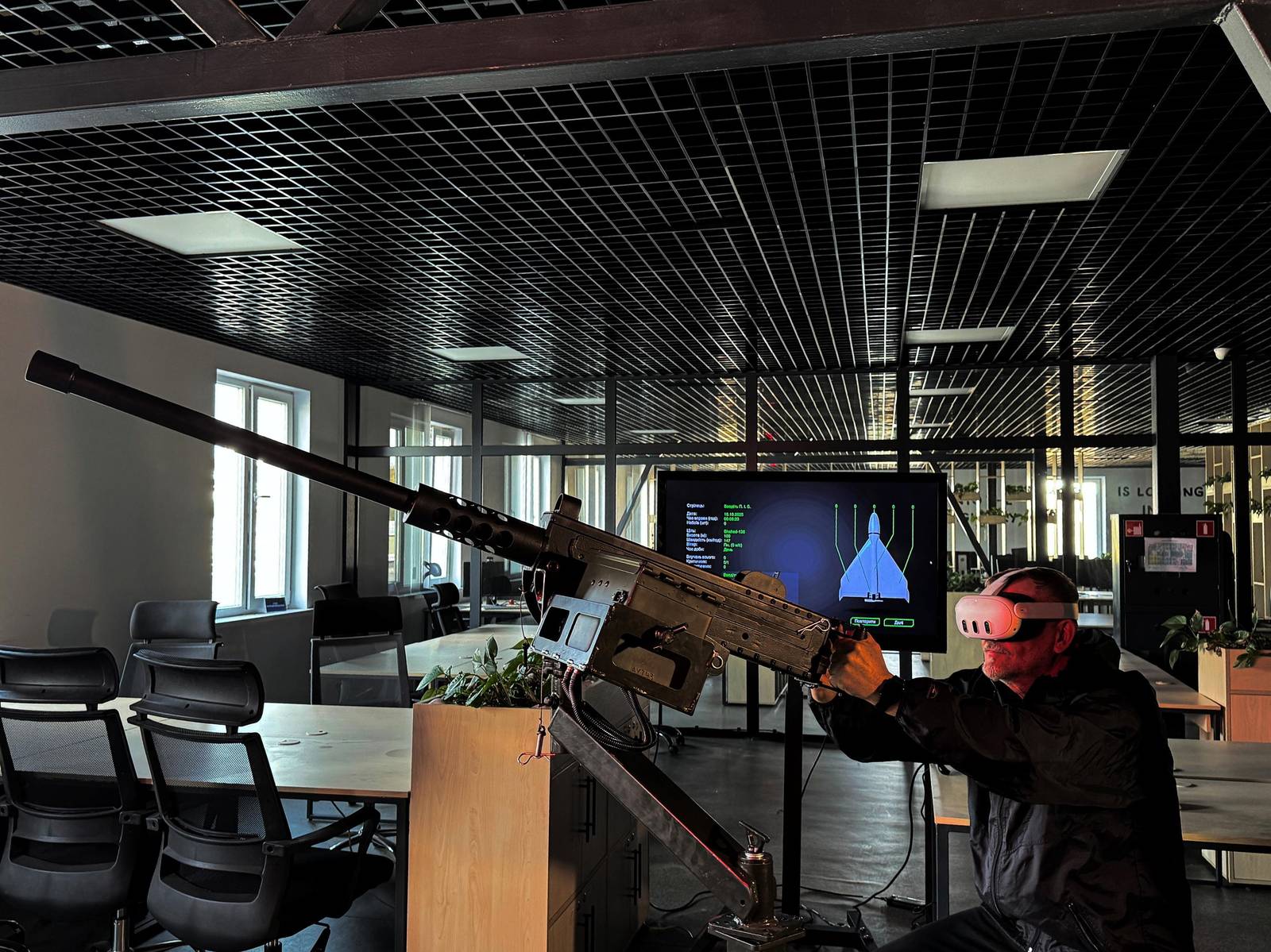
Develop a machine gun trainer-simulator for training cadets in aimed fire and shooting down Shahed-type aerial targets. The trainer has to immerse the user as fully as possible, reproduce near-real conditions and have realistic ballistics.
Two teams worked in parallel, software and mechanics. The challenge for the programmers was realistic ballistics. For the mechanical and electronics engineers it was a compact recoil mechanism that fits inside the mock-up body and still gives realistic recoil.
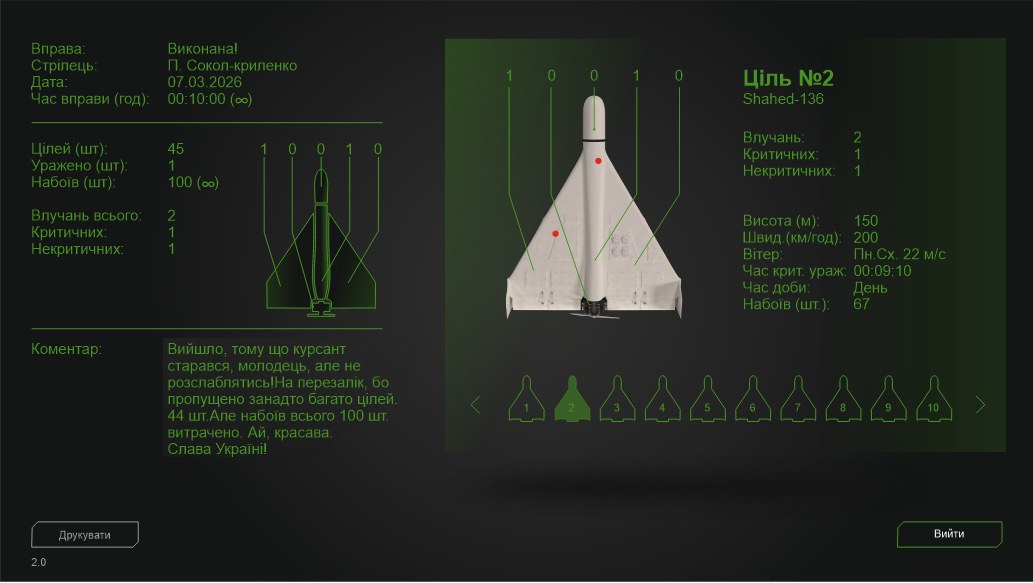
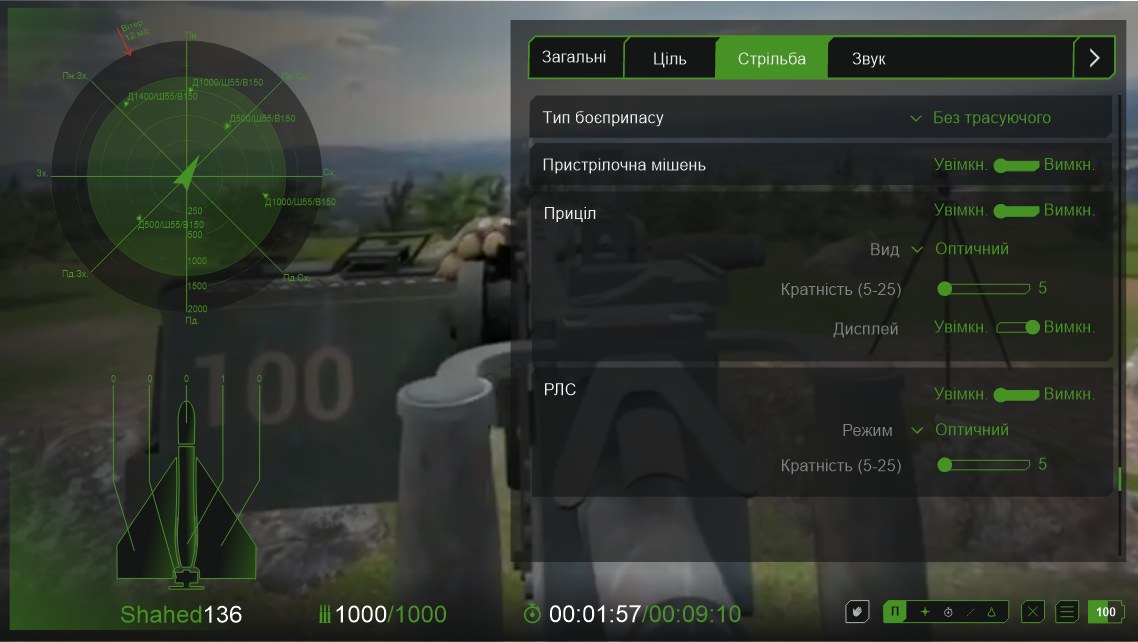
The finished hardware-and-software VR complex was built in 6 months: a full-size mock-up with a recoil system and software that lets you set different targets at different distances and speeds and record data such as the number of targets hit, rounds fired, time and more. The system’s motto: Trained means armed.
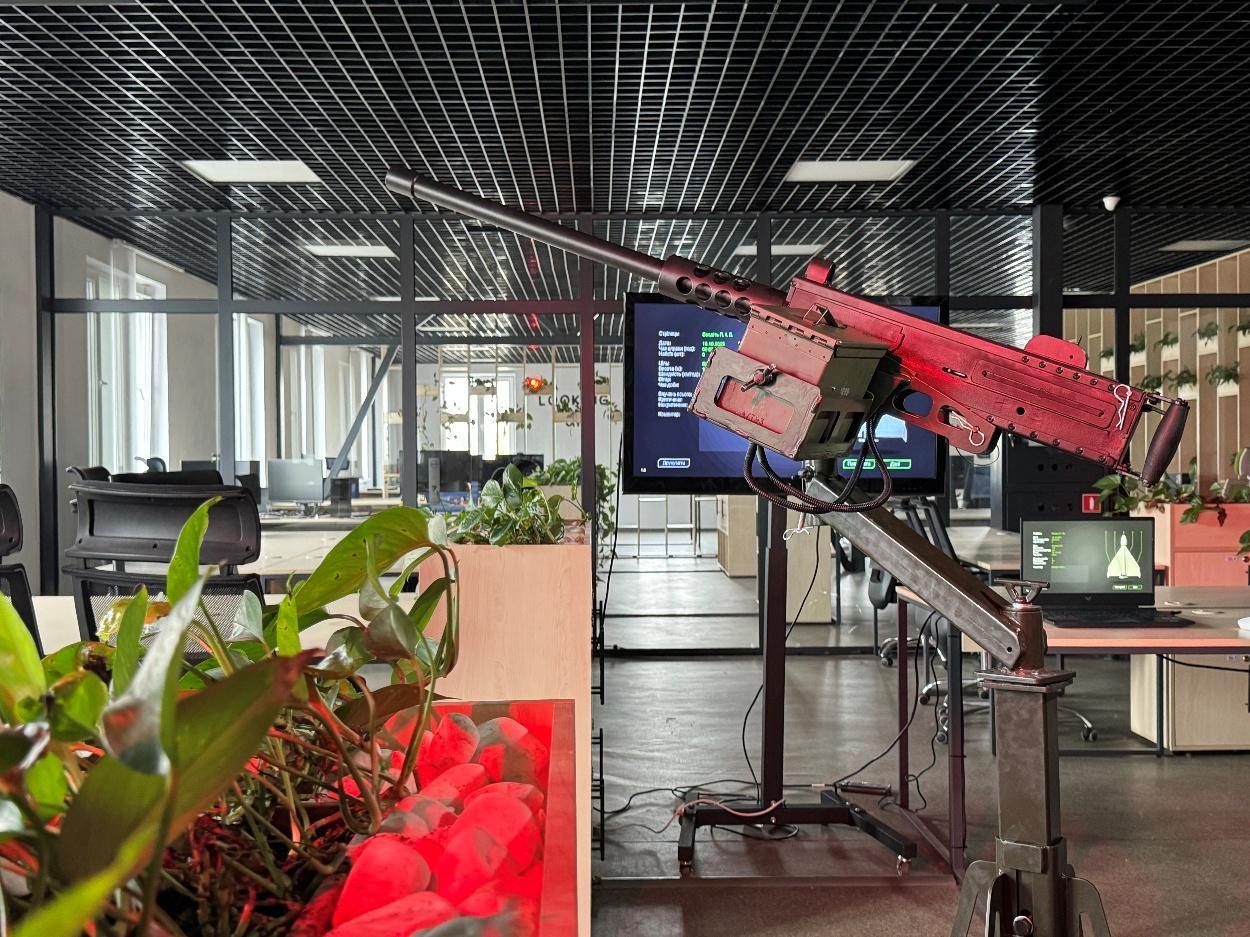
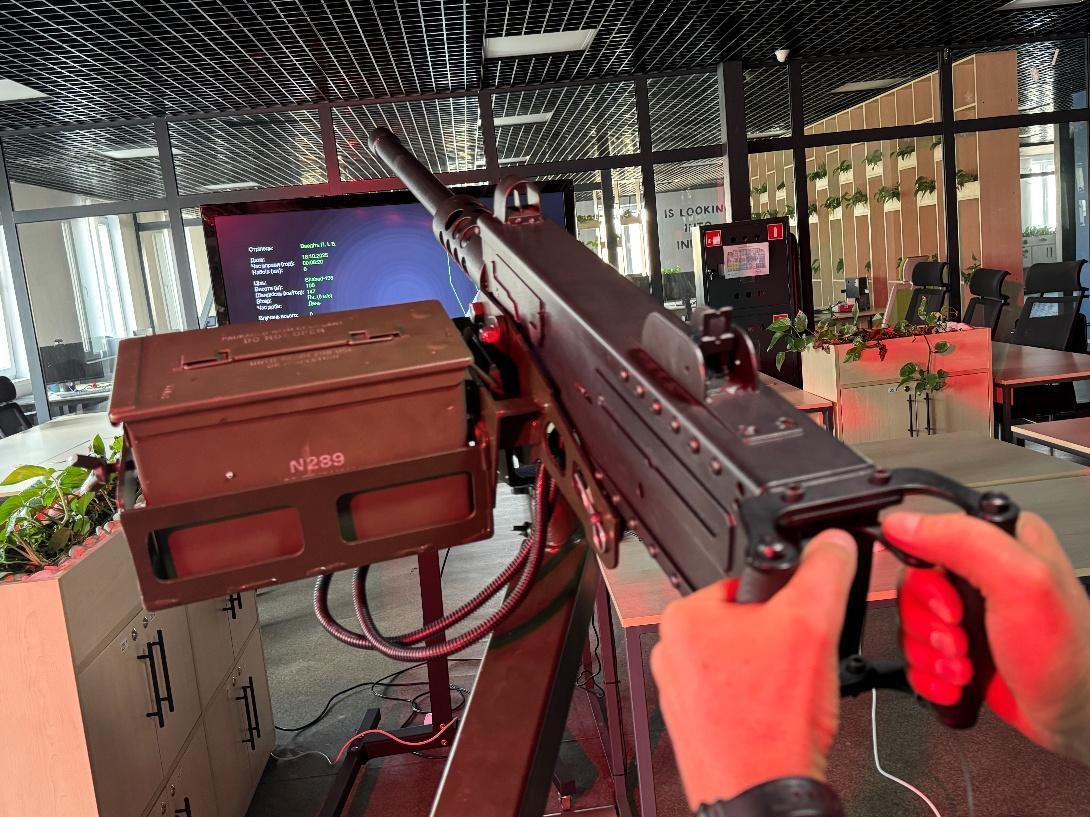
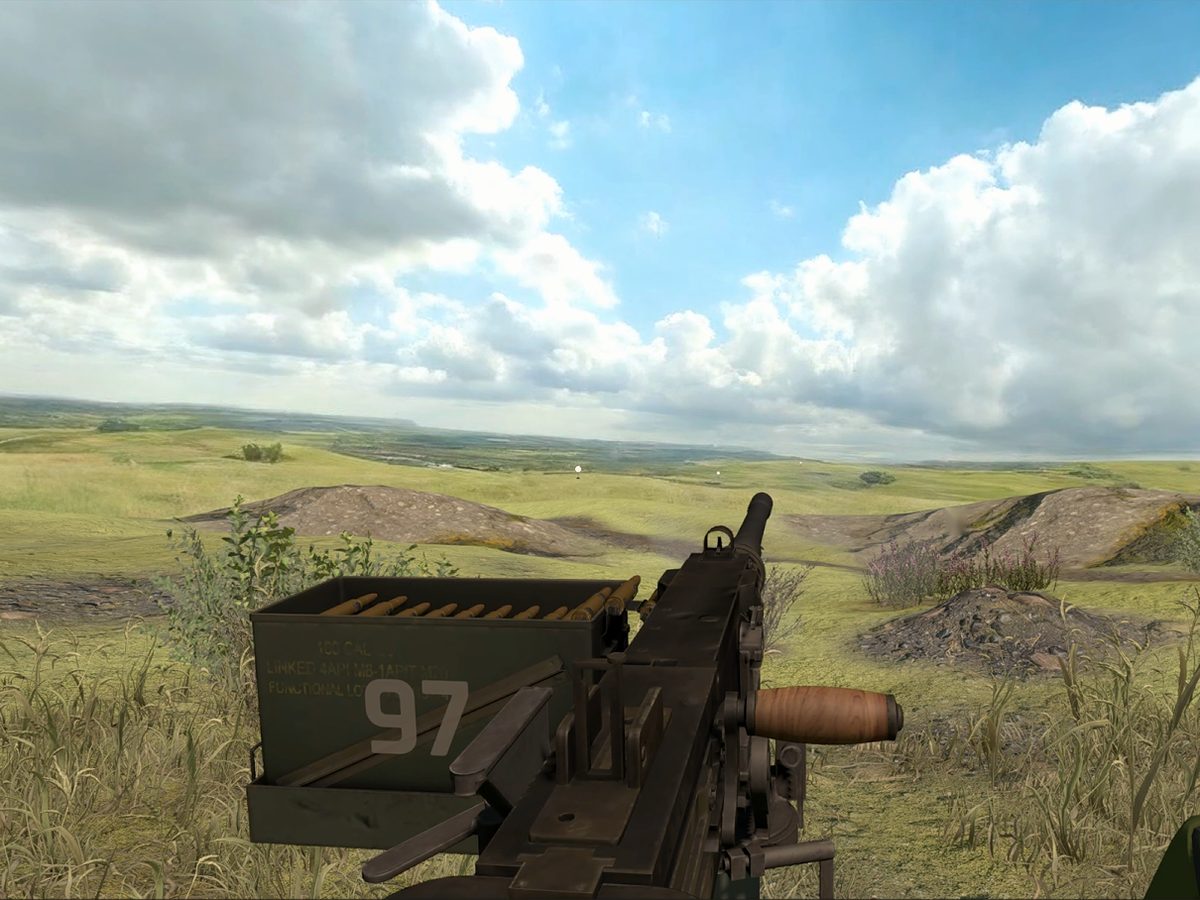
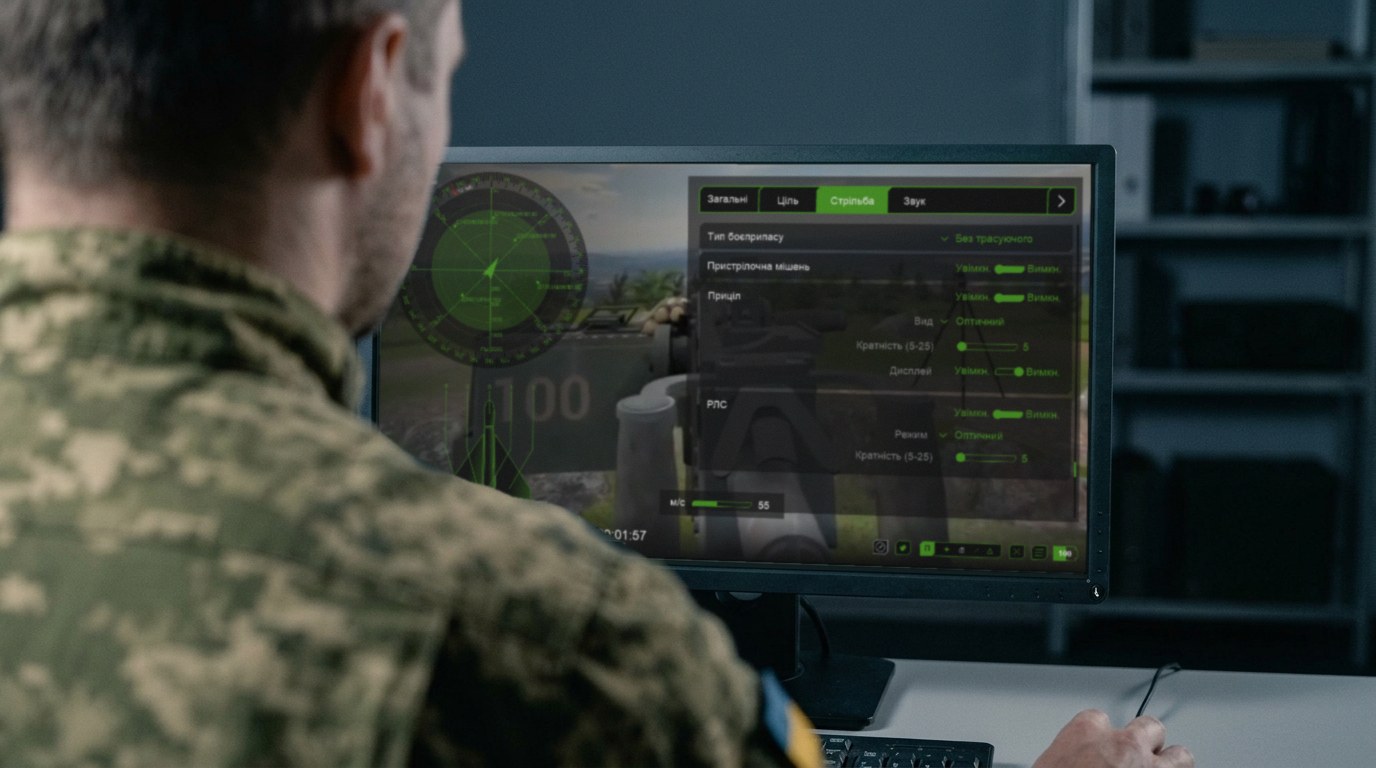
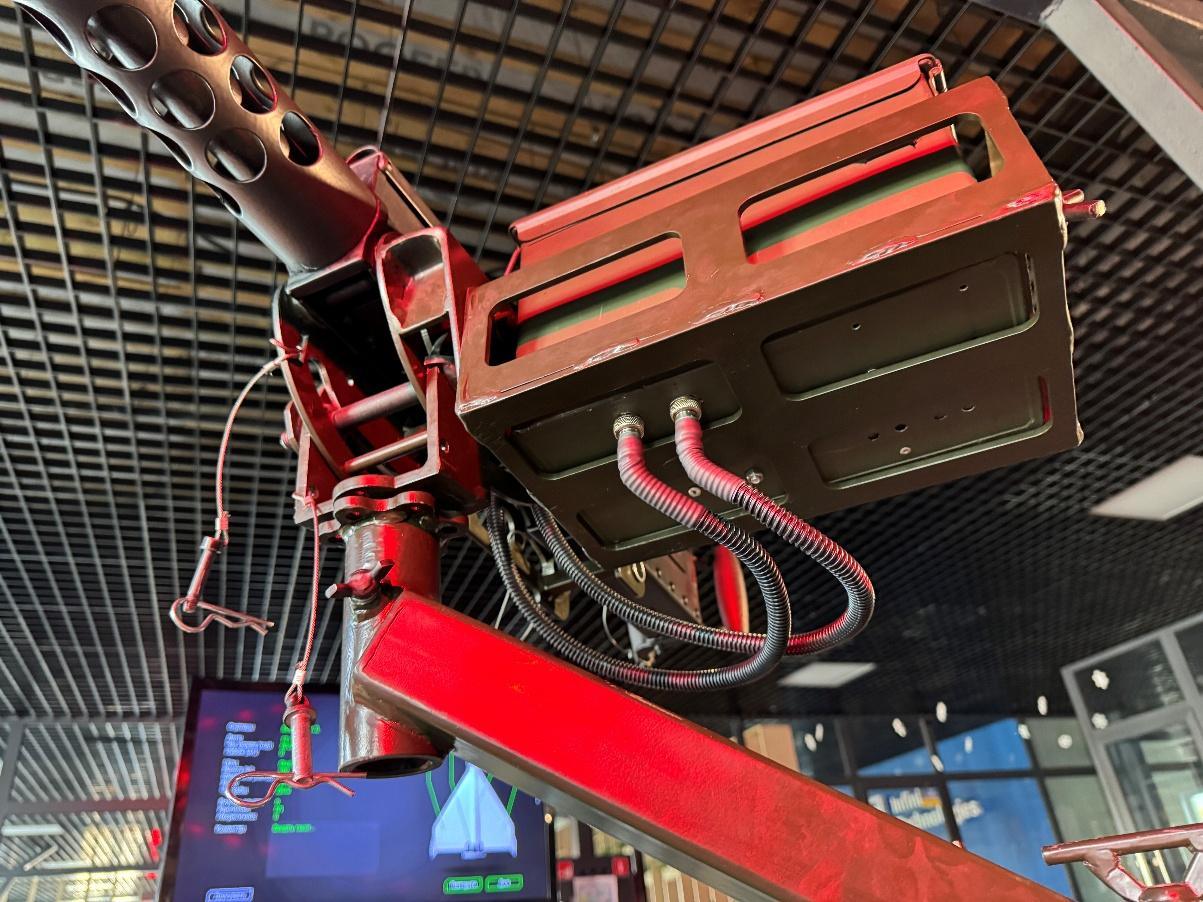
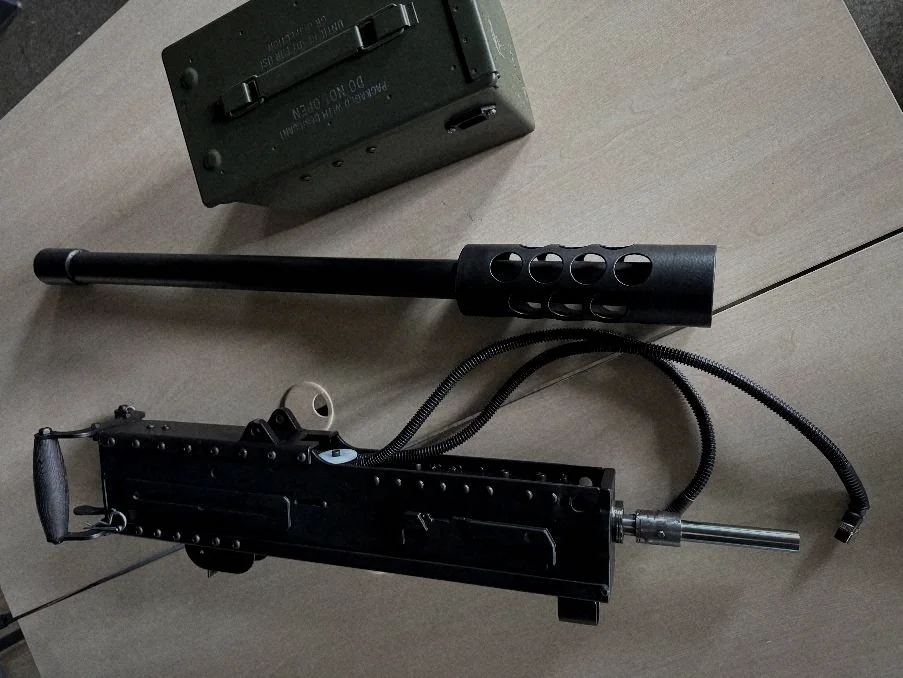
1. Technical specification and design. 2. A recoil mechanism: research and a series of tests. 3. Power supply and VR connection scheme. 4. A full-size mass-and-dimension mock-up of the machine gun: turning, milling, locksmith and welding work, painting. 5. Software: design, programming, testing and synchronization.
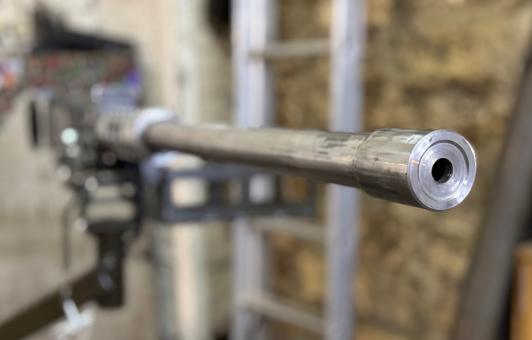
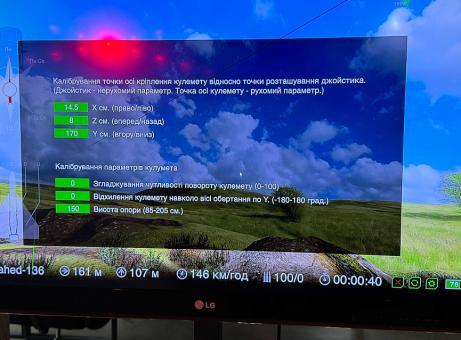
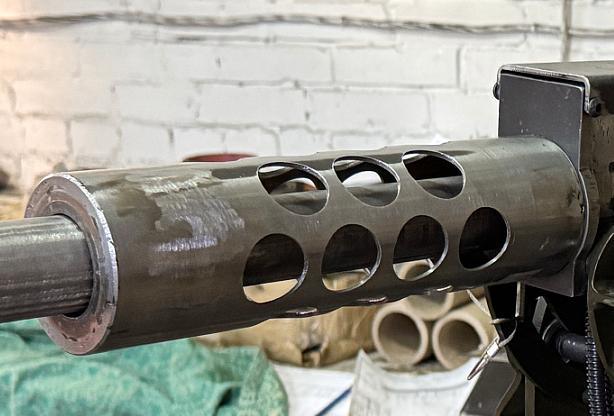
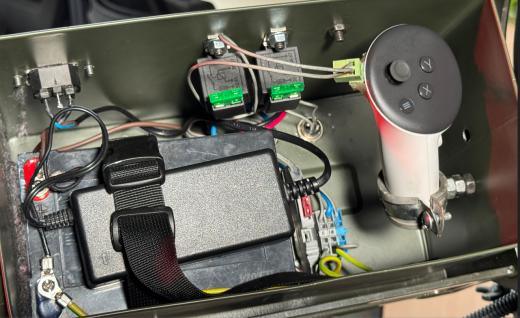
Managers and developers wrote the specification together with the client, for both the software and the hardware. The software side was clear. On the hardware side, one requirement became a real challenge: mobility. The mechanism had to imitate the recoil of a shot as realistically as possible and still fit inside the body of the M2 mock-up. In parallel, the concept was designed and the interface logic described. The software and mechanical parts were built at the same time by different teams.
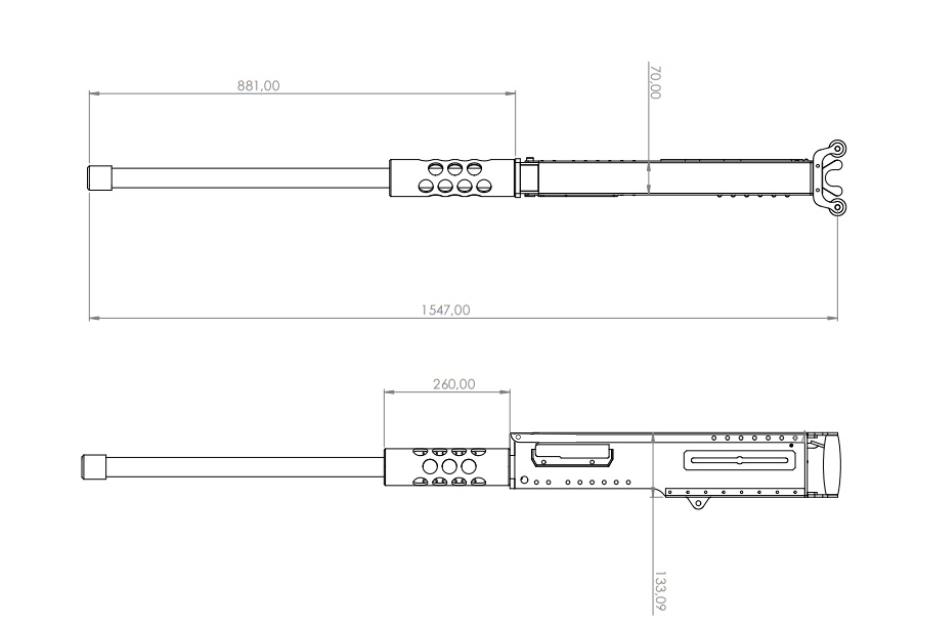
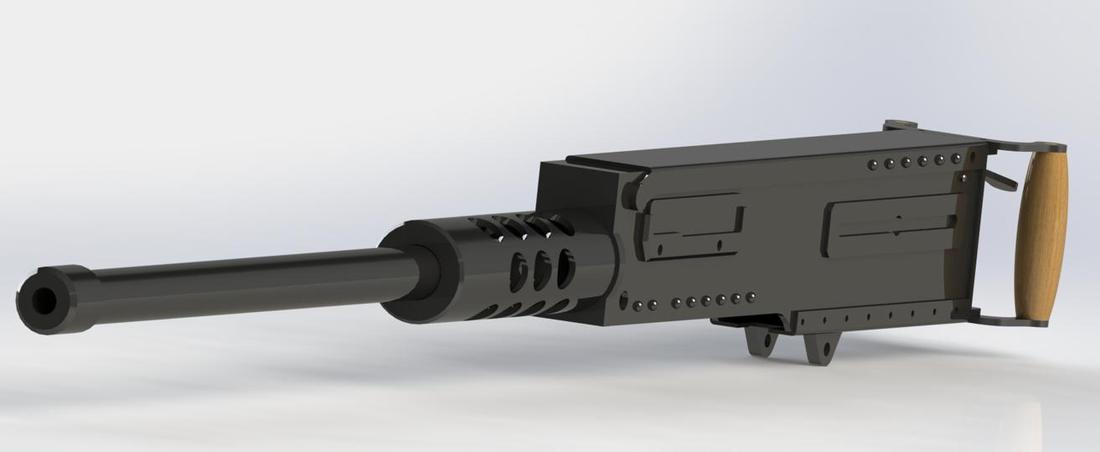
Analogs on the market turned out to be large: the drive motor usually sticks out of the machine gun mock-up. That did not suit the client, so a compact and powerful recoil mechanism became the main challenge for the engineer.
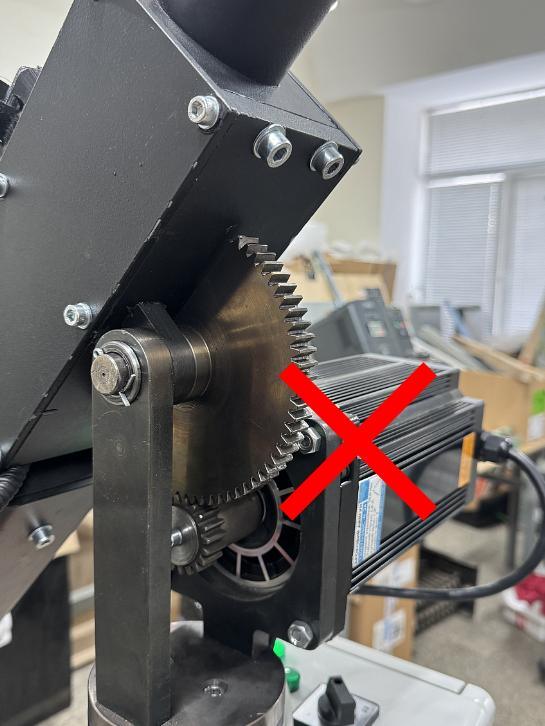
Existing motors that would fit inside the mock-up, for example from a hammer drill, were reviewed, and a 3D model was built to plan the layout. A simple impact mechanism showed that the hypothesis did not work, but a negative result is still a result. Conclusions: the mass of the body cancels the motor’s force, so a direct drive is not effective; a pendulum-like inertial mass is needed to swing the whole body and imitate real recoil.
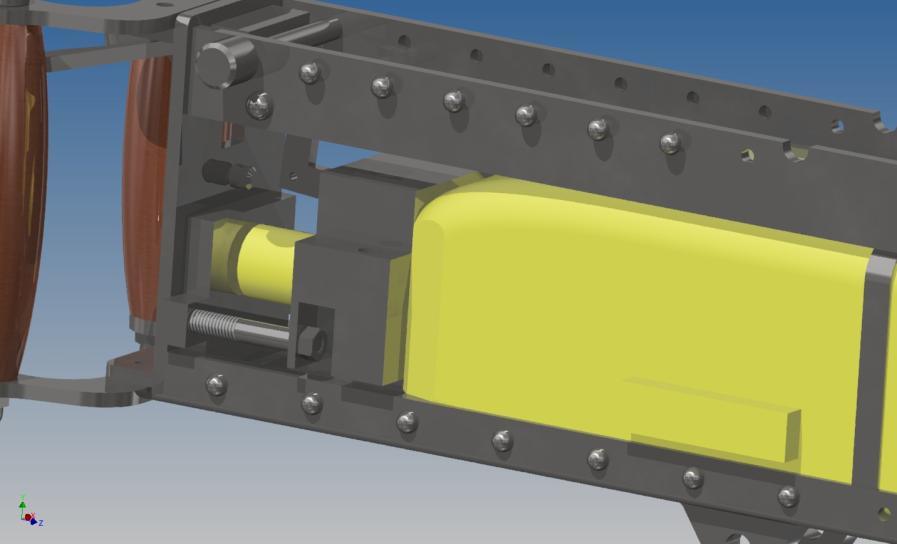
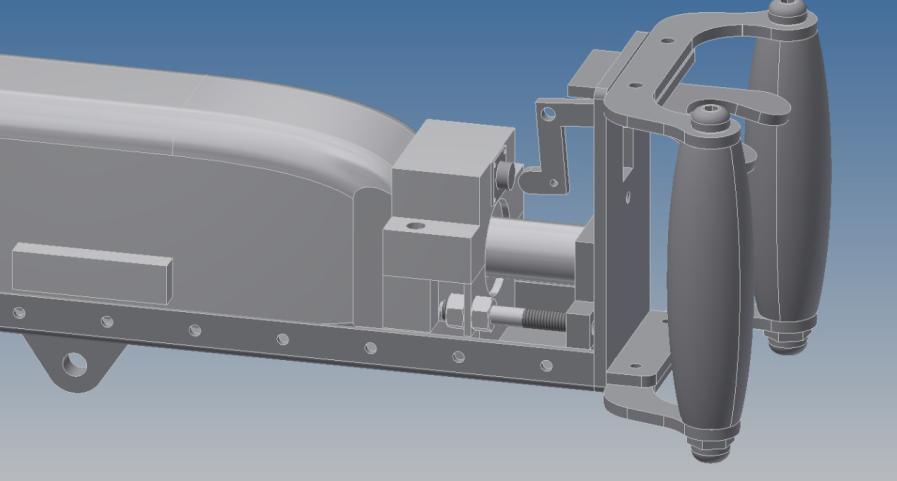
A linear motor would create extra oscillation and pushing movements close to real recoil. The option was rejected before testing: the motor cost far exceeded the project budget.
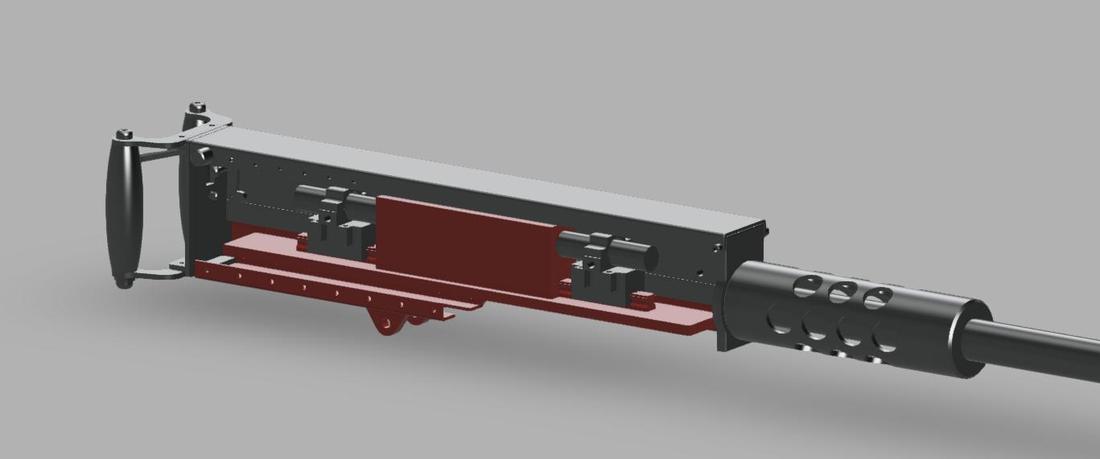
As an extra option, the client was offered a pneumatic drive, since a pneumatic impulse is the closest to a real shot. But mobility was the priority, and every variant needed either bulky cylinders or external lines. The cylinder was tried inside the body (a taller body) and outside it (a standard-size body), and all pneumatic variants were rejected.
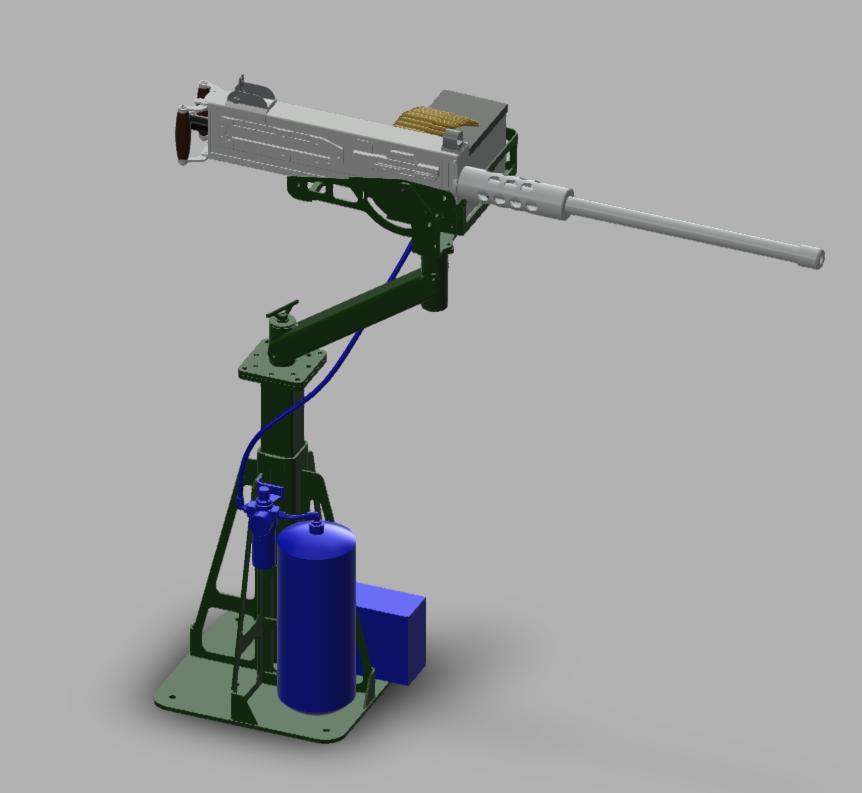
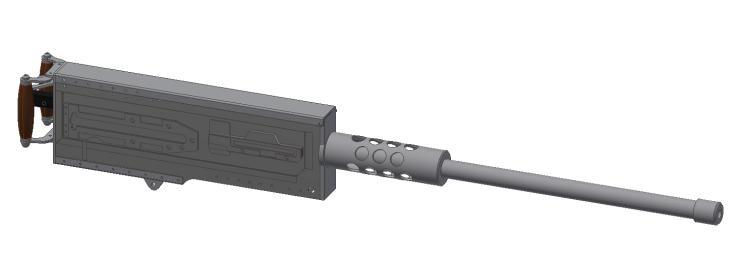
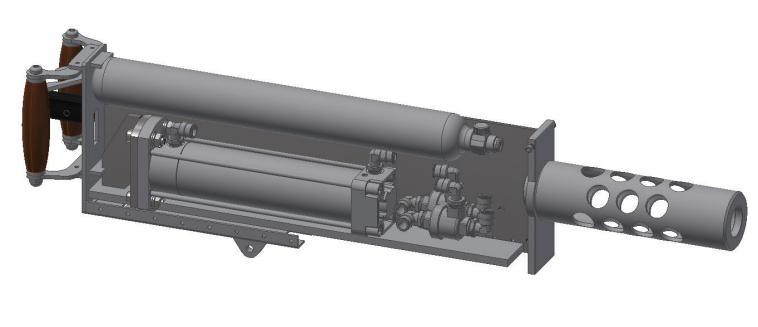
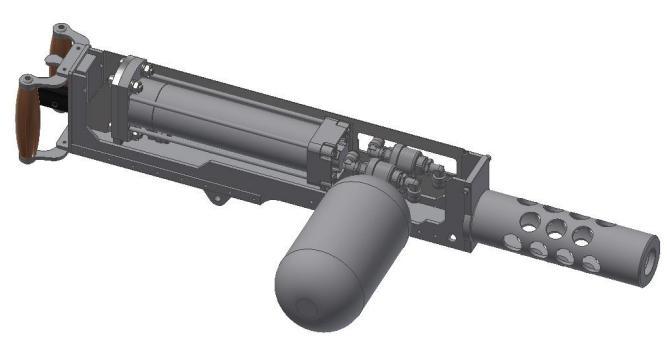
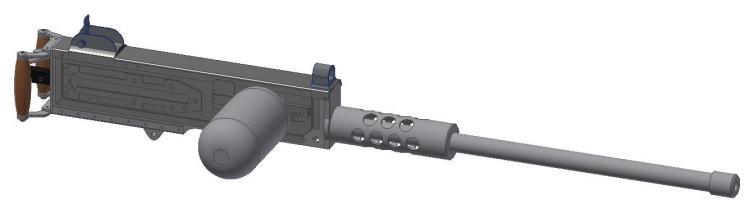
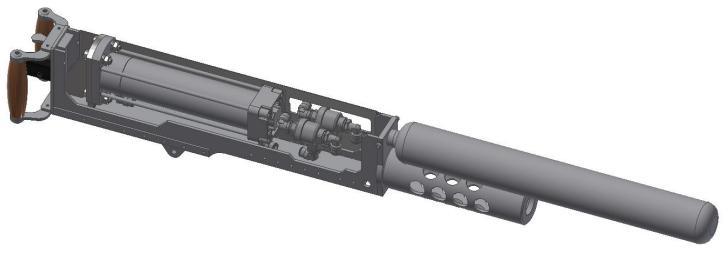
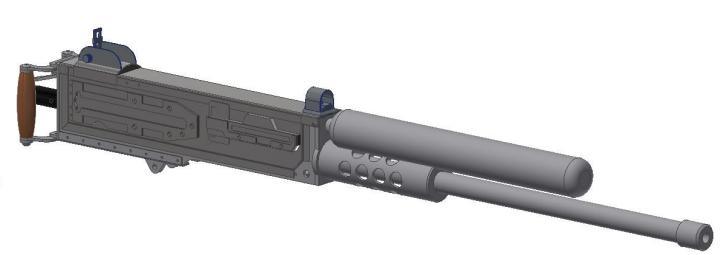
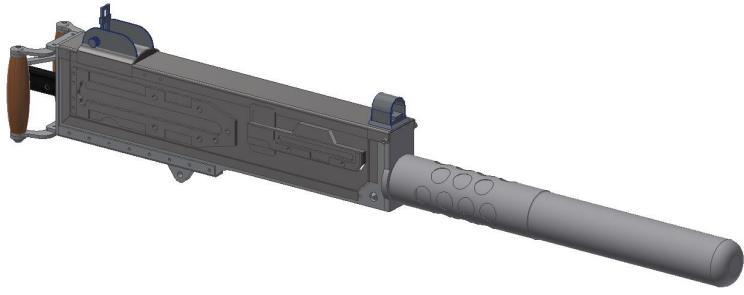
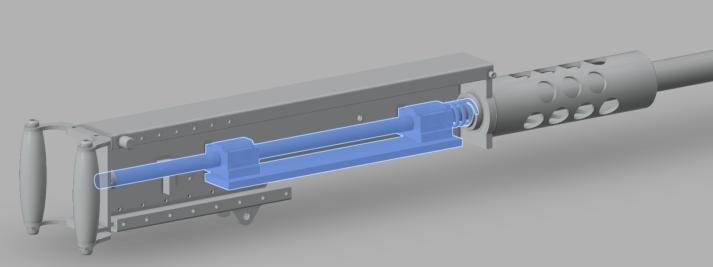
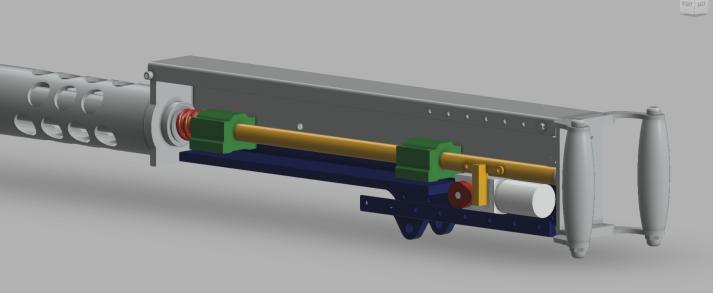
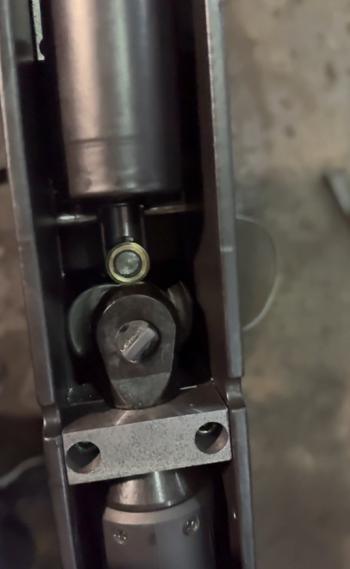
The team returned to the electric drive with an idea inspired by hypothesis 2. Mass distribution: the body is split horizontally into a static and a moving part. Stabilization: a central guide rod fixes the moving part and keeps its movement smooth. Drive: an electric motor with a reducer. Return: a return spring completes the recoil cycle. The first tests confirmed the direction, and a series of tests and refinements led to the result we needed.
At the design stage, the technical specification and the interface design were developed. Next came the 3D environment and objects, followed by the implementation of the Unity 3D mechanics.
We have received your request and will contact you shortly.